

Real Estate Risk Management
July 26, 2026
Real Estate Development Fundamentals
July 26, 2026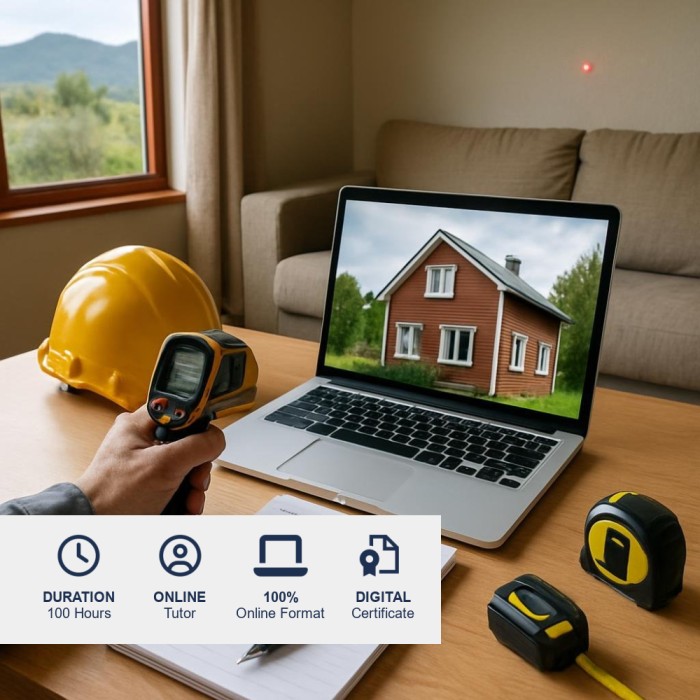
Property Inspection Fundamentals
Delivery: 100% Online and Self-Paced
Duration: 100 hours
Who Should Attend: Real estate agents, property inspectors, appraisers, investors, managers, and individuals interested in property condition assessment and valuation principles.
USD $391
Introduction
The Property Inspection Fundamentals course provides practical knowledge and structured tools to understand, organize, and apply key processes related to property inspection fundamentals. The program connects essential concepts with realistic real estate situations, helping participants improve professional judgment, service quality, operational efficiency, and business results.
Unit 1. Property Assessment Foundations
- Property components and condition terminology. Understanding property components and condition terminology and their relevance to property inspection fundamentals.
- Inspection and valuation objectives. Analyzing inspection and valuation objectives to support organized and informed decision-making.
- Professional scope and documentation. Applying principles related to professional scope and documentation in practical real estate situations.
Unit 2. Inspection and Data Collection
- Exterior and interior observation. Understanding exterior and interior observation and their relevance to property inspection fundamentals.
- Systems, defects, and maintenance indicators. Analyzing systems, defects, and maintenance indicators to support organized and informed decision-making.
- Photography, notes, and evidence gathering. Applying principles related to photography, notes, and evidence gathering in practical real estate situations.
Unit 3. Valuation and Market Evidence
- Comparable properties and market factors. Understanding comparable properties and market factors and their relevance to property inspection fundamentals.
- Condition, location, and property characteristics. Analyzing condition, location, and property characteristics to support organized and informed decision-making.
- Basic valuation approaches and limitations. Applying principles related to basic valuation approaches and limitations in practical real estate situations.
Unit 4. Reporting and Decision Support
- Clear findings and professional reports. Understanding clear findings and professional reports and their relevance to property inspection fundamentals.
- Risk communication and recommendations. Analyzing risk communication and recommendations to support organized and informed decision-making.
- Quality control and continuous improvement. Applying principles related to quality control and continuous improvement in practical real estate situations.
Methodology
- Self-paced study through an online learning platform.
- Guided reading of specialized course materials.
- Analysis of practical cases and real estate scenarios.
- Individual application exercises.
- Formative quizzes for each unit.
- Final integrative assessment.
Learning Resources
- Digital participant handbook.
- Downloadable learning guides.
- Technical reference sheets and supporting materials.
- Contextualized case studies.
- Glossary of relevant concepts.
Assessment
- Unit comprehension quizzes.
- Practical application activities.
- Analysis of professional situations.
- Final integrative assessment.
Learning Outcomes
By the end of the course, participants will be able to explain the main principles of property inspection fundamentals, identify its key processes, apply planning and control tools, and use professional practices to improve service quality, efficiency, risk management, and real estate performance.
Related products
-
Commercial Real Estate Fundamentals
USD $376 -
Property Management Essentials
USD $354 -
Real Estate Marketing Strategies
USD $388